Leptoglossus occidentalis

Biocontrol the western conifer seed bug

Common name: The western conifer seed bug
Scientific name: Leptoglossus occidentalis
Order: Hemiptera
Affects: Cones and seeds
Main season: Autumn

Anarsia lineatella

General information

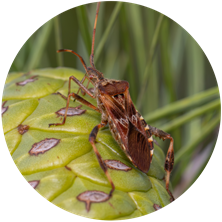
Leptoglossus occidentalis (Heidemann, 1910) a hemipteran bug of the family Coreidae, the western conifer seed bug is native to North America, where it acts as a forestry pest.

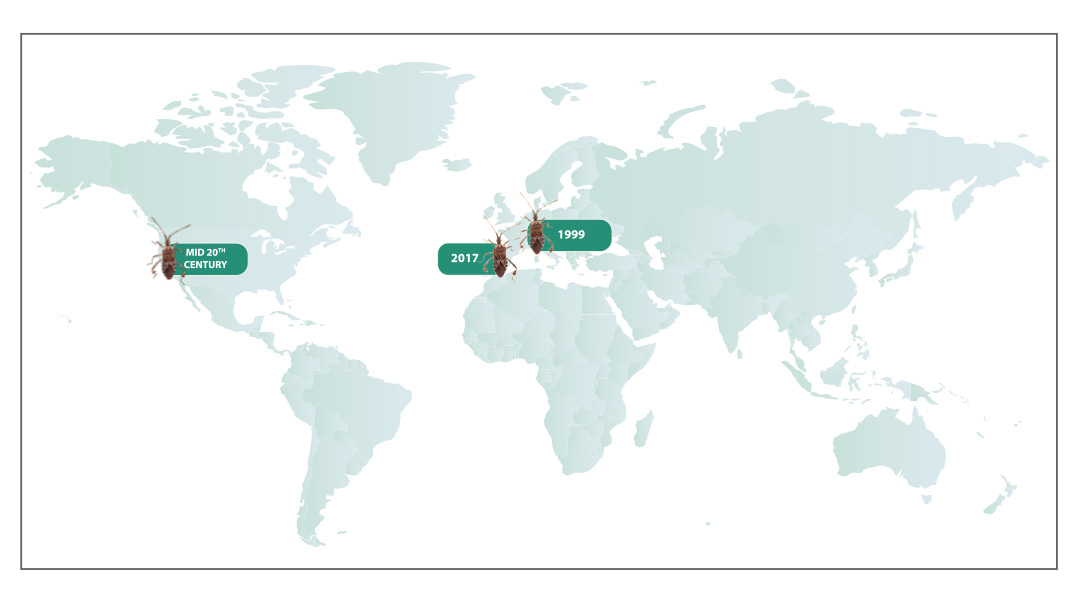
It has become widely established across Europe and the Mediterranean region, where it is classified as an invasive alien species. It is closely associated with conifers, particularly of the genus Pinus, feeding on their cones and seeds.

While harmless to humans and adult trees, its impact on seed yield and forest regeneration makes it a species of major forestry concern.

Adulto Anarsia lineatella


Morphology and Biology

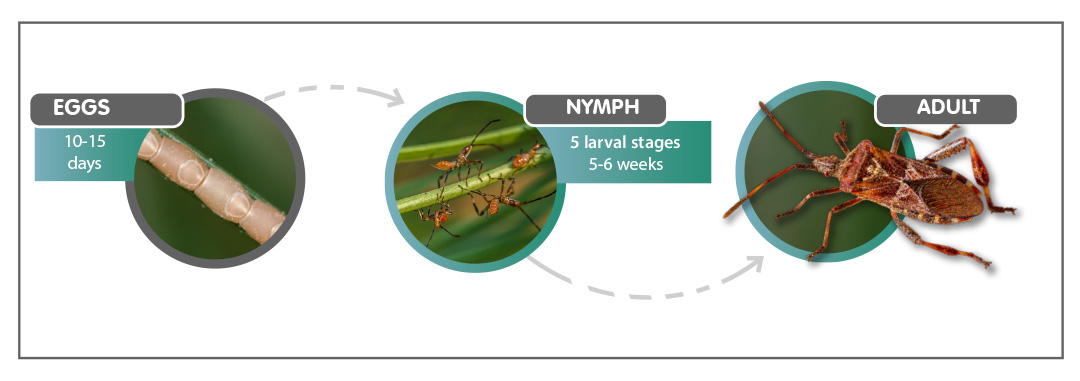
Leptoglossus occidentalis is a phytophagous hemipteran whose life cycle is directly linked to conifers, particularly the availability of developing cones and seeds. It typically completes one to two generations annually in temperate zones, reaching up to three in warmer conditions.

In the adult stage, the insect has an elongated, flattened body between 15 and 20 mm long, where females are larger than males. Its colour ranges from dark brown to reddish-brown. One of its most distinctive features is the light zigzag band on the forewings, as well as the broad, leaf-like hind legs typical of the genus Leptoglossus. The head is narrow, with long, segmented antennae and mouthparts adapted for piercing cones and seeds. Like other bugs, it has scent glands that give off an unpleasant smell to protect itself.

The eggs are small, elongated and cylindrical, ranging in colour from pale yellow to brown. They are laid in rows along needles, twigs or structures near the cones. Each female can lay several dozen eggs over the course of the spring.

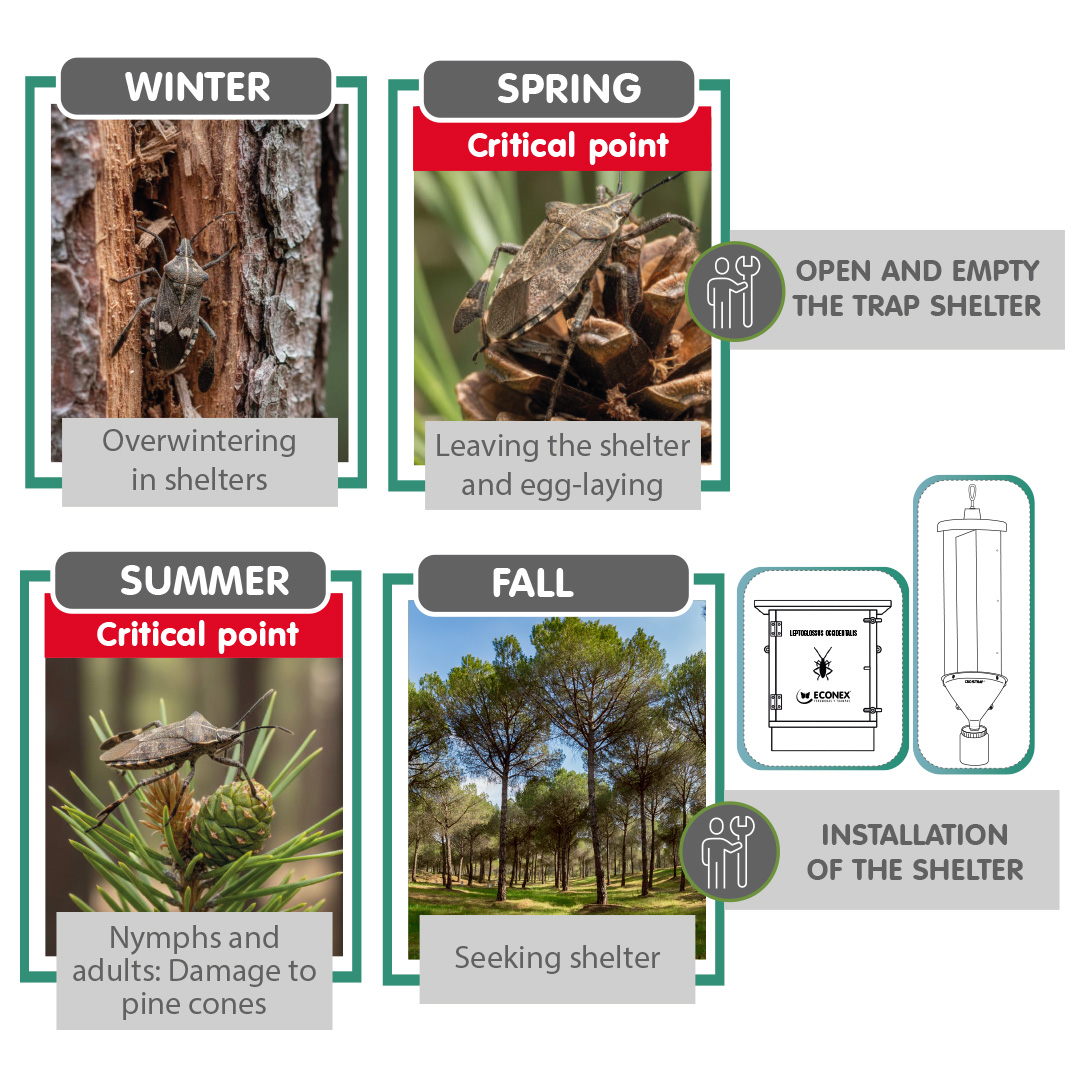
Nymphs go through cave stages. They look similar to adults but lack developed wings, starting lighter in colour and darkening as they grow. Running from late spring through to summer, this phase sees nymphs actively feeding on developing cones, causing most of the seed damage.

New adults emerge in late summer and feed for a short time before seeking overwintering shelter in autumn. They shelter under bark, in natural crevices or inside buildings near woodland, remaining in diapause until the following spring when the cycle begins again.

Adulto Anarsia lineatella


Damage

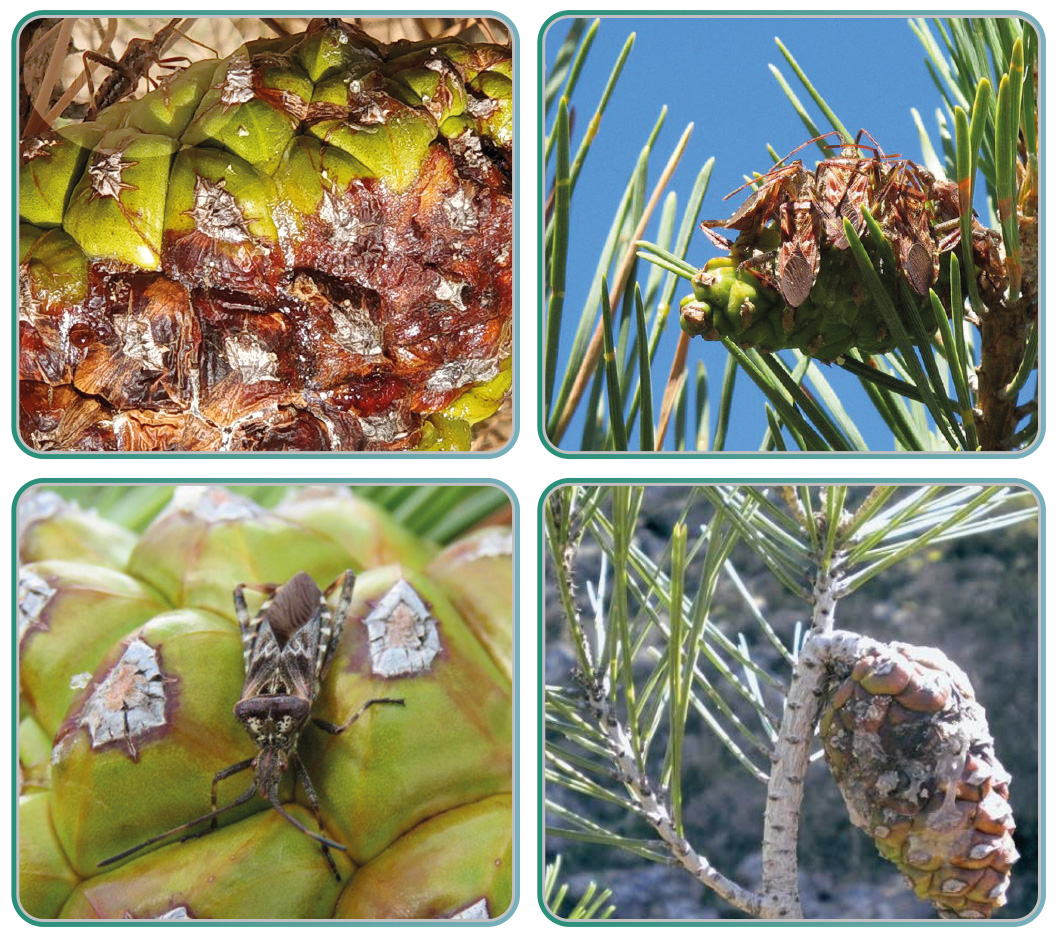
Leptoglossus occidentalis causes its main damage in forest environments by feeding on developing cones and conifer seeds. This activity results in empty, malformed, or non viable seeds, which significantly reduces germination capacity. Furthermore, it can facilitate the entry of fungi such as Diplodia Pinea

Although it does not usually weaken or kill mature trees, its impact is particularly significant in reforestation areas, nurseries, and seed orchards, where it can cause high losses in seed production and compromise natural regeneration and reforestation programmes.

The pine nut industry may see a reduction in production and its profitability threatened.

Daños


Detection and monitoring

Apply at a density of 1 to 3 diffusers per hectare.. Traps must be in place in the area to be monitored before the insects emerge from their winter shelters, as the weather improves in early spring. Monitoring can continue until the start of autumn, when they once again seek shelter for the winter.


Comprehensive monitoring

To ensure comprehensive monitoring, the number of traps per area should be increased depending on local conditions and site uniformity. Shelter traps should be spaced 100 to 500 metres apart per hectare, as the aggregation pheromone plume has a shorter attraction range than that of sex pheromones. For areas adjacent to infested sites, traps should be set up along the perimeter, roughly 50 metres from the protected area, to act as a barrier.

Daños


Period of use

Active trapping is recommended during the autumn months.

Daños en albaricoques causados por la Anarsia lineatella


Necessary material

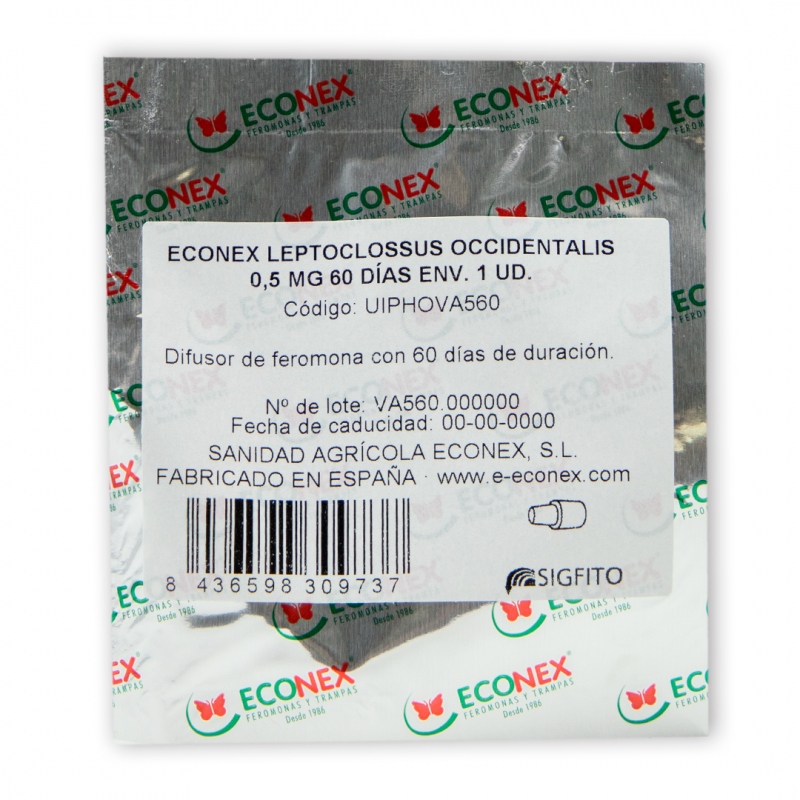
To maximise capture eficiency, we recommend using the ECONEX LEPTOGLOSSUS OCCIDENTALIS 0.5 MG 60 DAYS 1 UNIT.

>ECONEX LEPTOGLOSSUS OCCIDENTALIS 0.5 MG 60 DAYS 1 UNIT

ECONEX LEPTOGLOSSUS OCCIDENTALIS 0.5 MG 60 DAYS 1 UNIT
Aggregation pheromone diffuser to attract both sexes of the species Leptoglossus occidentalis, with an infield duration of 60 days.

Code: UIPHOVA560

boton comprar

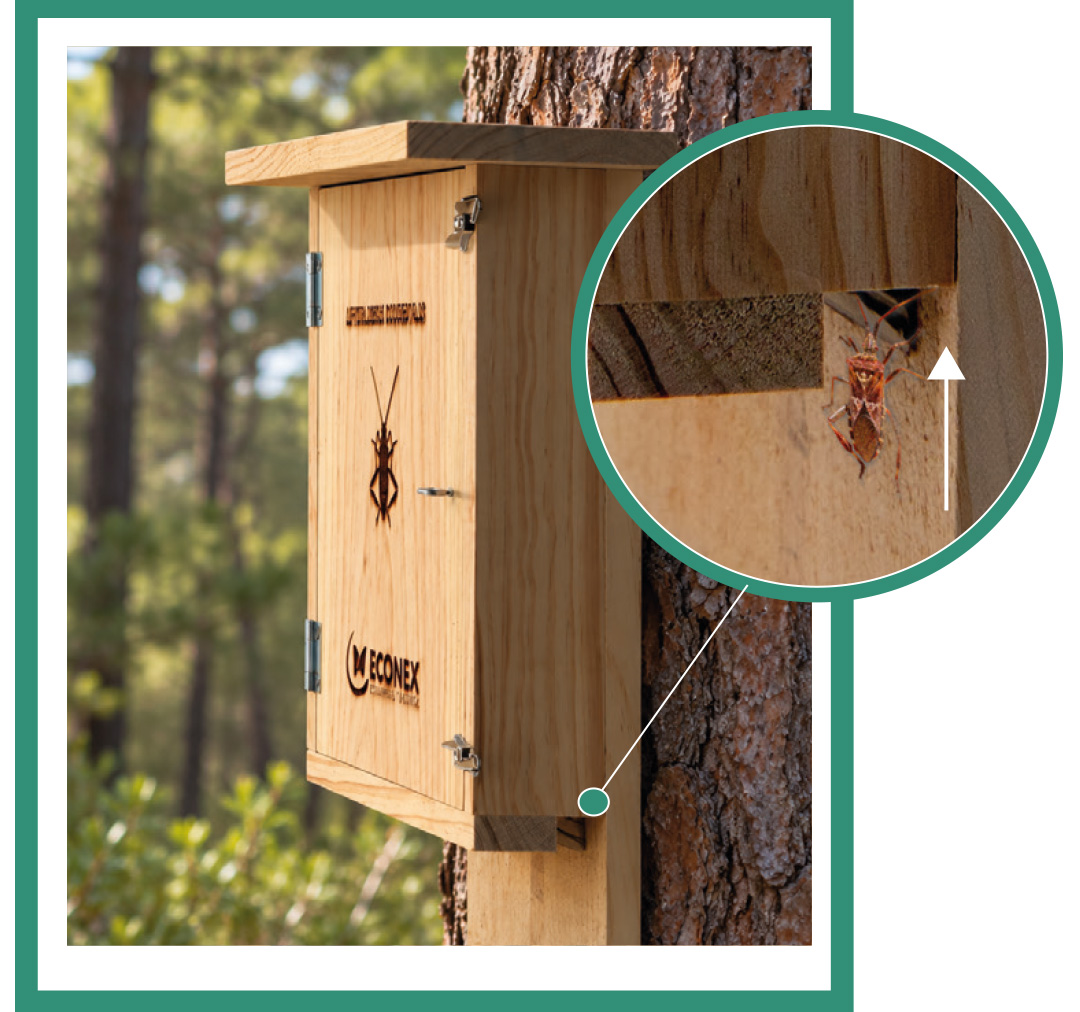
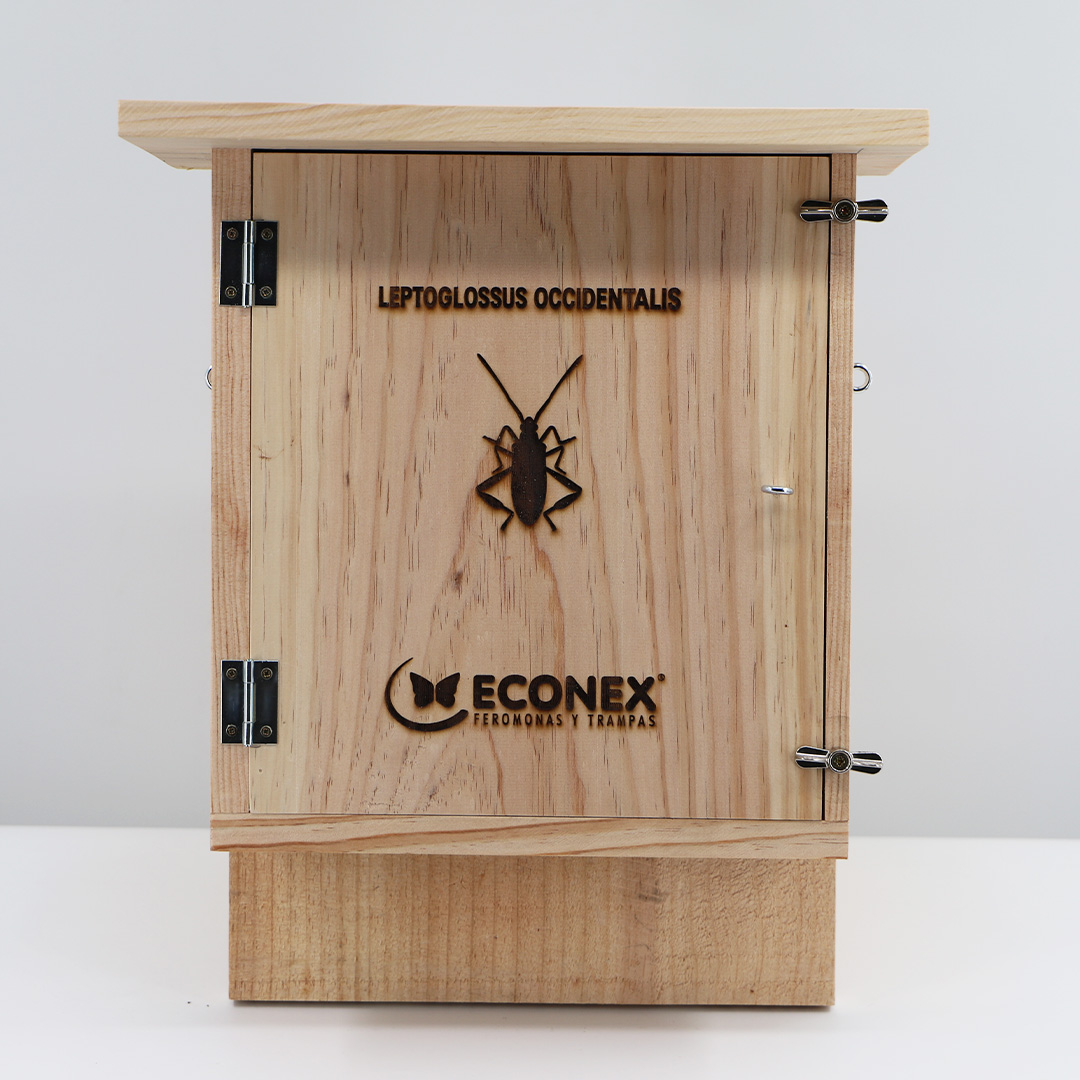
The ECONEX LEPTOGLOSSUS SHELTER TRAP, a shelter device made from high strength solid wood to withstand the elements. It is designed to be attached to a tree trunk or other support. The interior of the trap is lined with corrugated cardboard to make the shelter comfortable, creating a suitable place for the insect to overwinter.

>Difusor de feromonas ECONEX ANARSIA LINEATELLA 2 MG 40 DÍAS ENV. 1 UD.

ECONEX LEPTOGLOSSUS SHELTER TRAP
Shelter device made from high strength solid wood to withstand the elements.

Code: UIPFETA401

boton comprar

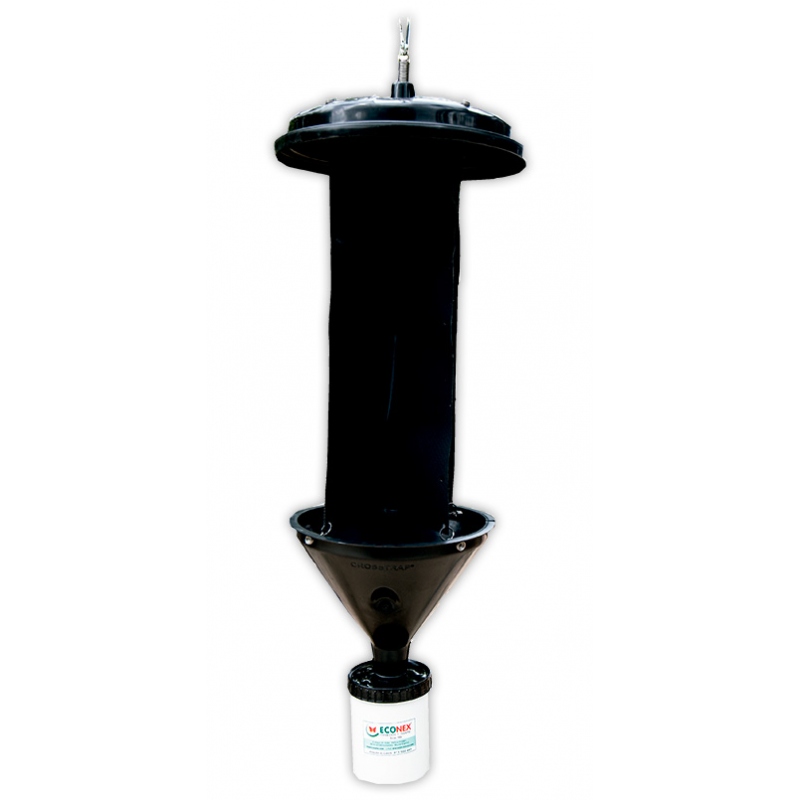
CROSSTRAP MINI® or ESCOLITRAP® traps can also be used to detect and monitor Leptoglossus occidentalis

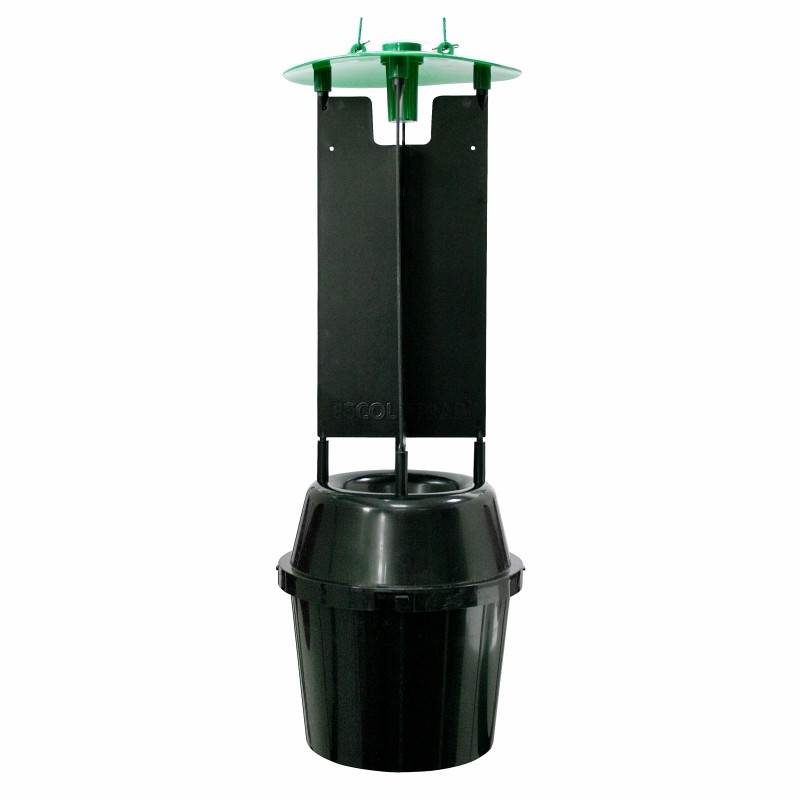
ESCOLITRAP®

ESCOLITRAP®
This is a trap designed to capture xylophagous insects that attack woody crops, such as pomegranate, walnut, chestnut and carob trees, vineyards, etc.

Code: UIPFETA112

boton comprar

The CROSSTRAP® trap works with two types of collector: CROSSTRAP® WET COLLECTION CUP (with slider) 1 L for wet trapping, and CROSSTRAP® DRY COLLECTION CUP (with slider) 1L for live trapping.

CROSSTRAP MINI WITH WET COLLECTION CUP

CROSSTRAP® MINI WITH WET COLLECTION CUP (with slider)
Trap for coleopteran insect interception during flight.

Code: UIPFETA226
OMDF register number (Ministry of Agriculture of Spain): 153/2013

CROSSTRAP® WET COLLECTION CUP

CROSSTRAP® MINI WITH DRY COLLECTION CUP (with slider)
Trap for coleopteran insect interception during flight.

Code: UIPFETA204
OMDF register number (Ministry of Agriculture of Spain): 153/2013
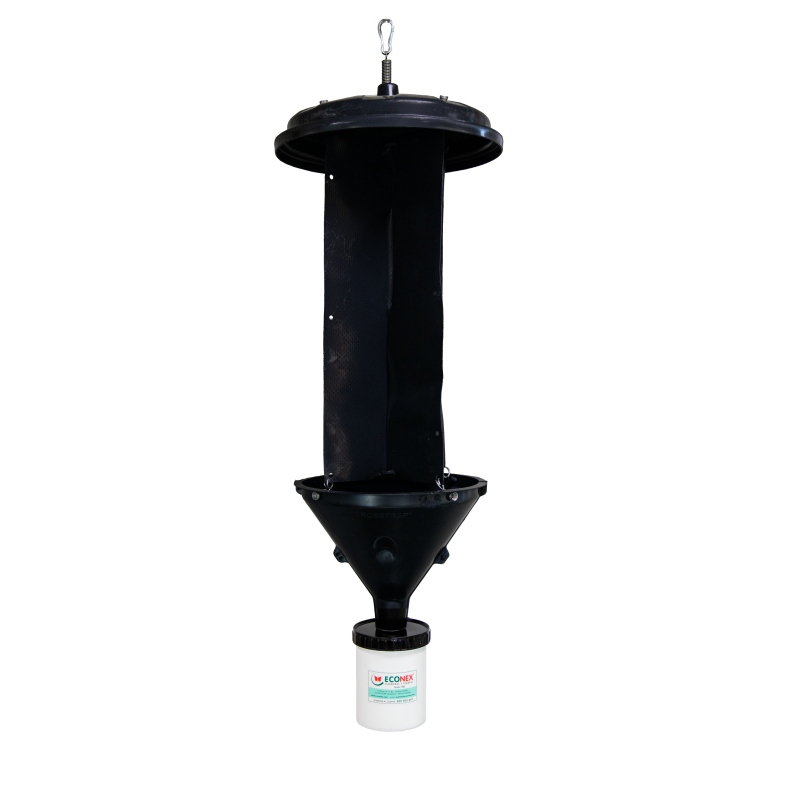
CROSSTRAP WET COLLECTION CUP

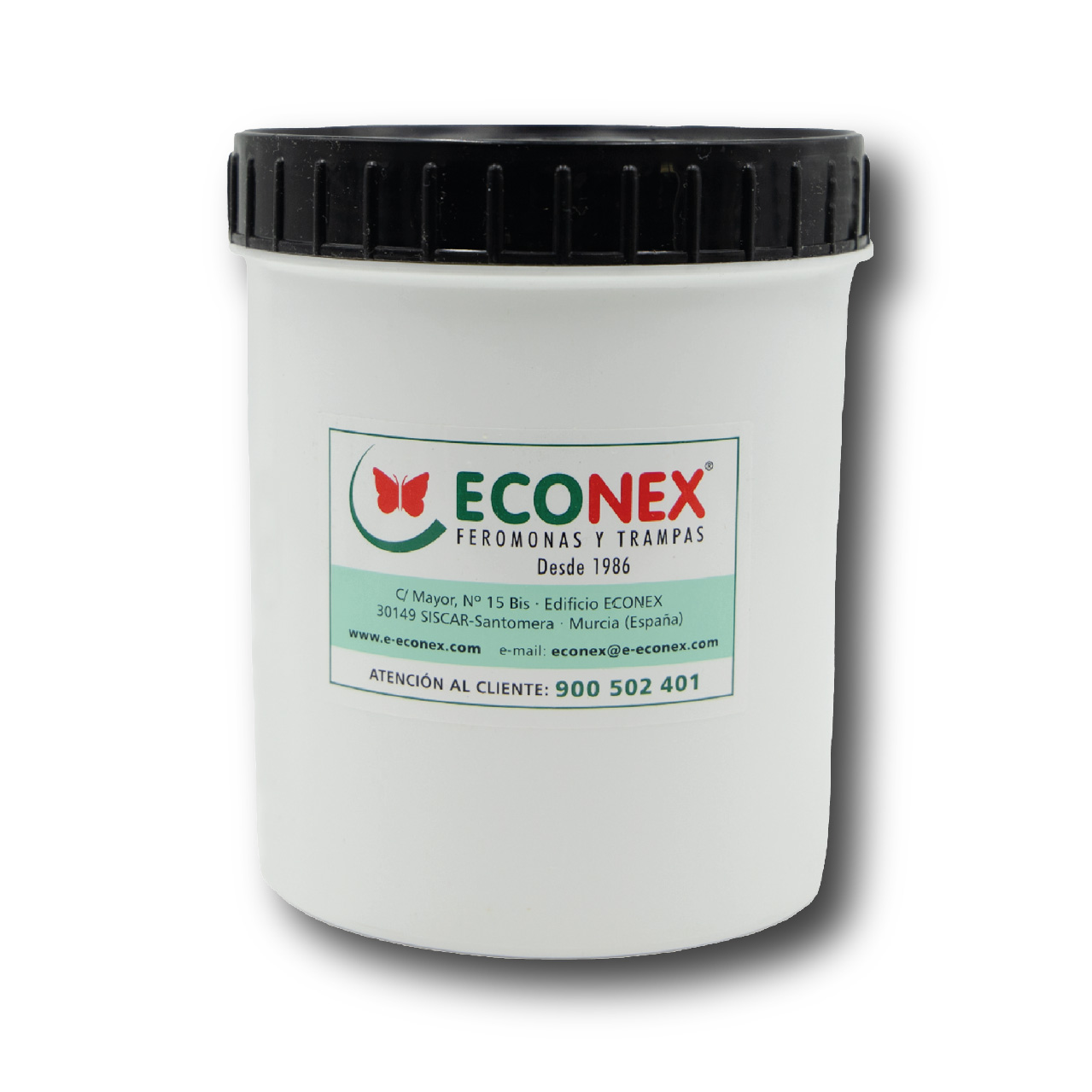
The CROSSTRAP® WET COLLECTION CUP (with slider) 1 L for retaining captured insects is located at the bottom of the funnel. It has a capacity of approximately 1 litre (11 cm diameter x 13.5 cm high).

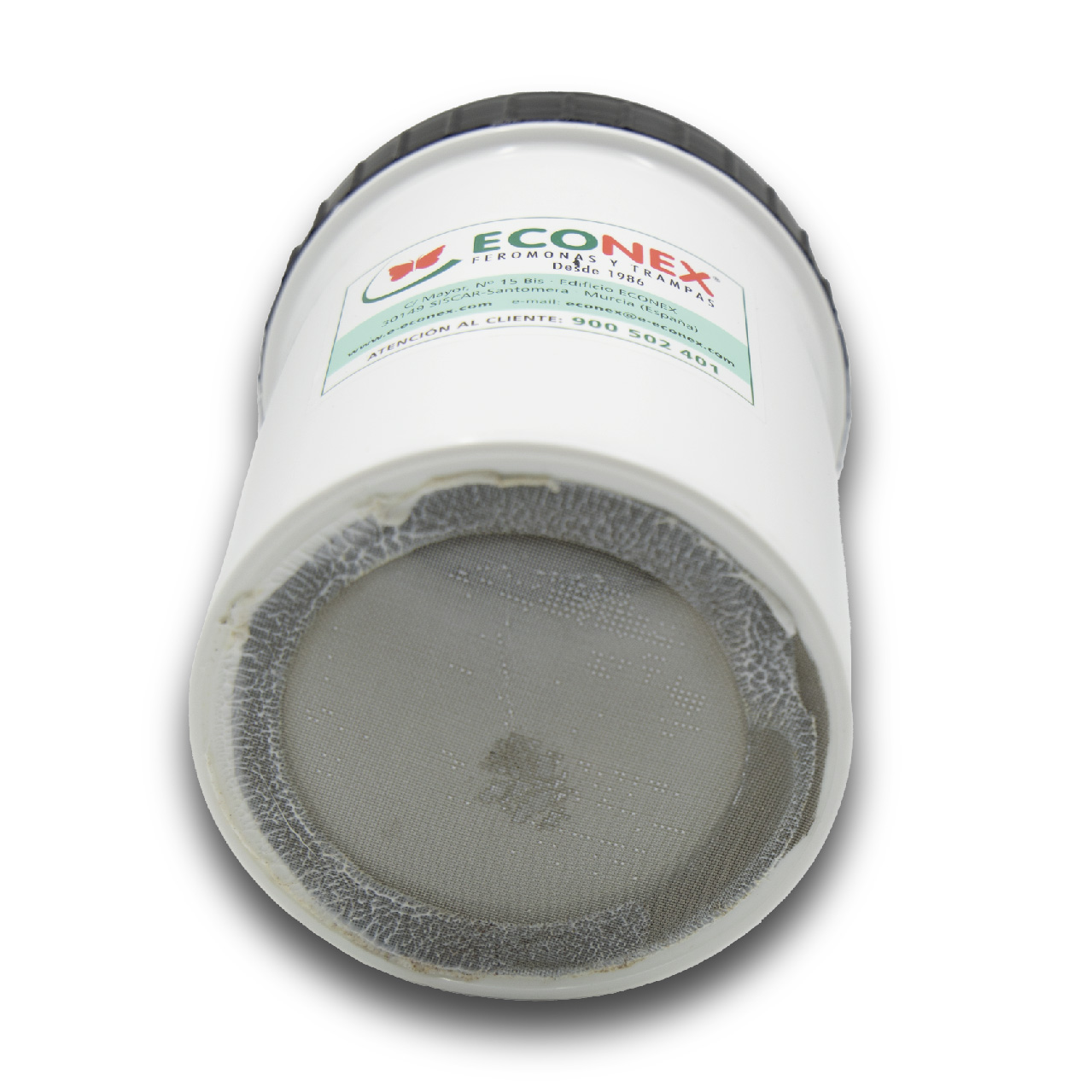
The CROSSTRAP® DRY COLLECTION CUP (with slider) is designed to hold the captured insects is located at the bottom of the funnel. It has a capacity of approximately 1 litre (11 cm diameter x 13.5 cm high) and is fitted with a stainless-steel mesh at the bottom to allow rainwater to drain away.

Wet catches allow precise identification of the captures. For this purpose, it is recommended to fill the collector with 10 ml of 10 or 20 % diluted propylene glycol or, if necessary, car antifreeze. This liquid serves both as a kill agent and as a preservative, as long as it is not diluted too much by rain, in which case it should be replaced.
CROSSTRAP WET COLLECTION CUP

CROSSTRAP® WET COLLECTION CUP (with slider) 1 L
Wet catch collector located at the bottom of CROSSTRAP® traps.

Code: UIPFETA311

CROSSTRAP DRY COLLECTION CUP

CROSSTRAP® DRY COLLECTION CUP (with slider)
Trap collector for dry use, or live traps, located at the bottom of the CROSSTRAP® traps.

Code: UIPFETA157
CROSSTRAP DRY COLLECTION CUP

CROSSTRAP® DRY COLLECTION CUP

View from below

Factors influencing spread

Spread is influenced by several key factors which, when combined, enable rapid expansion:

It is an insect with good flying ability, which facilitates its spread.

It feeds on numerous species of conifers.

A climate with mild winters increases the survival rate of adults. Every year there are more insects and they colonise new areas.

The transport of untreated timber, the movement of forestry and agricultural machinery, and trade between nurseries are all routes of spread.


Storage

The product must be stored in its original packaging and kept refrigerated at 4°C or in a freezer at -18°C, in which case it will remain usable for 2 and 4 years, respectively. Keep away from food and drink.


Storage of the diffusers


ECONEX LEPTOGLOSSUS OCCIDENTALIS 0.5 MG 60 DAYS 1 UNIT.

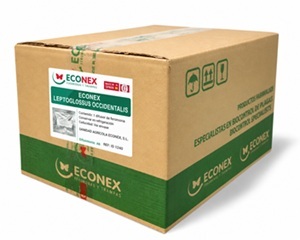
Corrugated cardboard box of 400 units (20 packs of 20 units).
Box size: 0.32 x 0.24 x 0.22 m (length x width x height).
Box weight: 1.5 kg.
No. of boxes per pallet: 80
Pallet size: 1.20 x 0.80x 2.05 m (length x width x height).
Pallet weight: 154 kg.

Caja con 400 unidades

box with 400 units.
(20 packs x 20 units)


Packaging traps


CROSSTRAP® MINI WITH WET COLLECTION CUP (with slider)

Corrugated cardboard box of 16 units.
Box size: 0,60 x 0,80 x 0,48 m (ancho x largo x alto).
Box weight: 11,30 kg.
Number of boxes per pallet: 8
Pallet size: 0,80 x 1,20 x 2,05 m (ancho x largo x alto).
Pallet weight: 100 kg.

Caja con 8 unidades

Box of 16 units.


CROSSTRAP® MINI WITH DRY COLLECTION CUP (with slider)

Corrugated cardboard box of 16 units.
Box size: 0,60 x 0,80 x 0,48 m (ancho x largo x alto).
Box weight: 11,30 kg.
Number of boxes per pallet: 8
Pallet size: 0,80 x 1,20 x 2,05 m (ancho x largo x alto).
Pallet weight: 100 kg.

Caja con 8 unidades

Box of 16 units.


Recommended information:


ECONEX LEPTOGLOSSUS OCCIDENTALIS 0.5 MG 60 DAYS 1 UNIT LEAFLET

Leaflet in PDF format that can be downloaded by clicking on the image.

ECONEX LEPTOGLOSSUS OCCIDENTALIS 0.5 MG 60 DAYS 1 UNIT LEAFLET


ECONEX LEARNING CENTER

ECONEX puts at your disposal the first open knowledge center that brings together everything necessary to implement pest biocontrol in your crops. We have developed different types of resources to share with you the knowledge we have acquired during our more than 40 years of experience. Each of them is designed to respond, in the best possible way, to different questions related to pheromones, attractants, repellents and insect traps.

To access ECONEX LEARNING CENTER click on the image.

web resources